
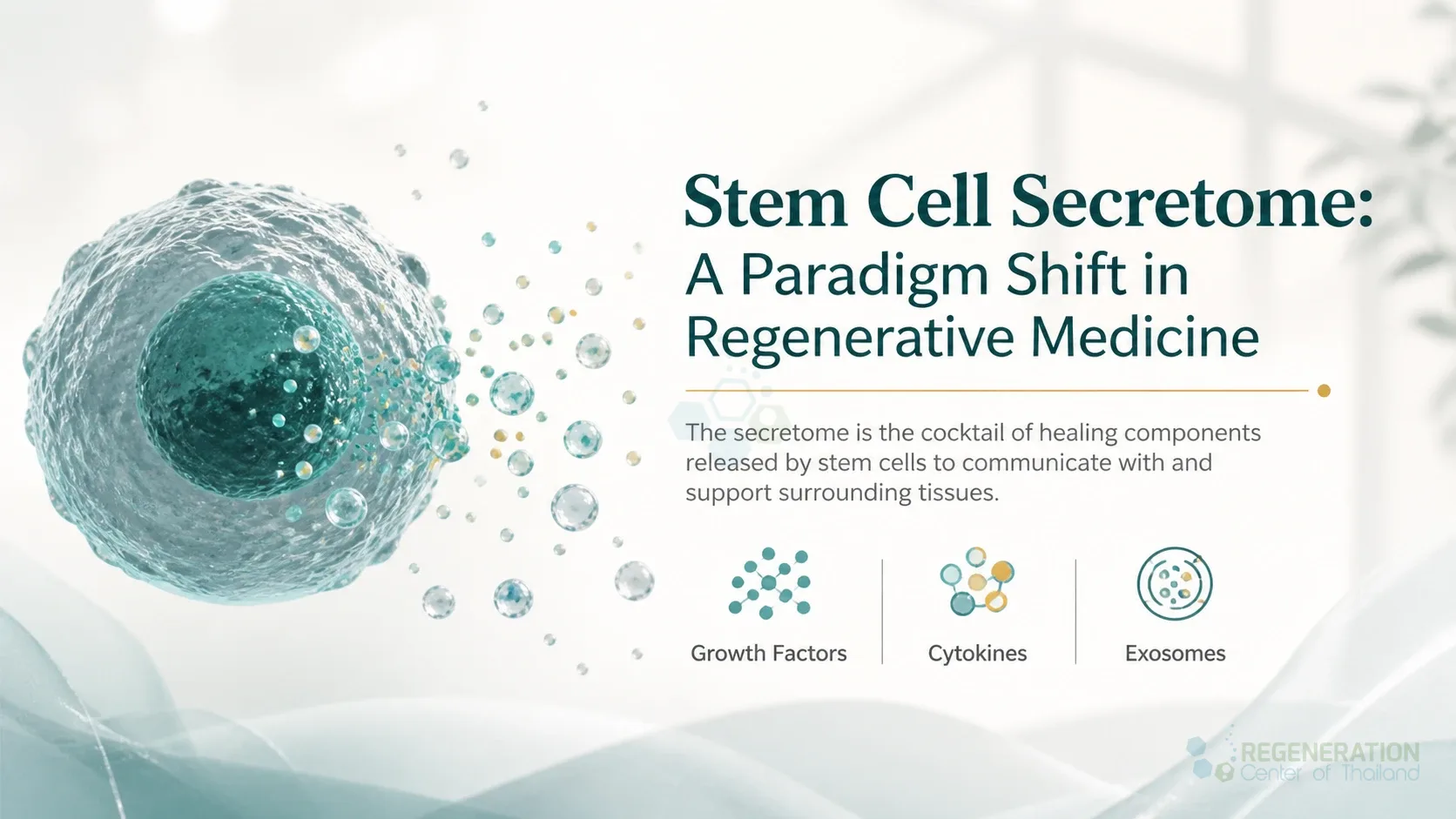
Stem cell secretome therapy represents a paradigm shift in regenerative medicine, offering many of the benefits of stem cell treatments without the need to transplant live cells in the same session. The secretome is the cocktail of healing components (including growth factors, cytokines, and tiny vesicles called exosomes) that stem cells release to communicate with other cells and direct tissue repair. These naturally secreted molecules have a remarkable ability to stimulate recovery and reduce inflammation through cell-to-cell signaling.
Clinical studies across multiple medical fields have shown promising results with stem cell secretomes. However, making secretome therapy widely available remains a technical challenge. At the Regeneration Center, we combine stem cell therapies with their own secretome to maximize healing outcomes for patients as part of an integrated functional medicine approach. We recognize that using stem cells alone, without harnessing these powerful signals, may not fully realize their regenerative potential. Our combined approach amplifies the benefits of stem cells while minimizing the risks associated with cell transplantation, and it supports patients with complex conditions ranging from autoimmune diseases to chronic heart disease.
What Is the Stem Cell Secretome Made Of?
Over the past two decades, we have discovered that much of a stem cell’s healing power comes not just from the cells themselves but from the substances they release. These secreted factors, collectively known as the stem cell secretome, orchestrate tissue repair. The secretome comprises a wide range of bioactive molecules produced by stem cells. Key components include:
- Growth factors: Proteins like VEGF (vascular endothelial growth factor) and PDGF (platelet-derived growth factor) that stimulate new blood vessel formation (angiogenesis) and tissue growth.
- Cytokines and chemokines: Signaling proteins (such as interleukins like IL-10) that reduce inflammation or recruit the body’s own cells to aid in healing. These same pathways are important in chronic rheumatoid arthritis, lupus, fibromyalgia, and other connective tissue diseases.
- Extracellular vesicles (exosomes): Tiny membrane-bound particles filled with microRNAs, proteins, and lipids. These vesicles act as delivery packages, carrying signals that can influence the behavior and gene expression of recipient cells and are a central part of modern exosome-based therapies.
Notably, the exact mix of secretome molecules can vary depending on the type of stem cell and the conditions in which the cells are grown. For example, mesenchymal stem cells (a common type used in regenerative therapy), especially those derived from adipose tissue or stromal vascular fraction (SVF) cells, tend to release high levels of anti-inflammatory proteins and angiogenic factors. These substances help form new blood vessels. The Regeneration Center uses advanced proteomic and genetic analysis tools, supported by ongoing stem cell research, to profile these components in detail. By understanding precisely which molecules are present in a stem cell’s secretome, clinicians can better harness these cell-derived healing factors as a standardized, cell-free treatment for patients who may also be candidates for combined stem cell and secretome therapy.
How Does the Stem Cell Secretome Promote Healing?
When an injury occurs, the stem cell secretome acts as a conductor of the body’s healing orchestra. Rather than the stem cells themselves doing all the work, the secretome’s molecules  send signals that trigger and coordinate repair processes in the surrounding tissues. In essence, these signals encourage the body to heal itself. Key healing actions of the secretome include:
- Stimulating new blood vessels and tissue growth: Growth factors such as VEGF and PDGF in the secretome prompt the formation of new blood vessels and support the growth and survival of cells in injured tissue. This is critical in conditions such as heart attack, ischemic heart disease, and congestive heart failure, where restoring blood flow can protect vulnerable tissue.
- Reducing inflammation: Anti-inflammatory cytokines (like IL-10) released by stem cells help calm an overactive immune response. By reducing swelling and inflammation, the secretome creates a more favorable environment for tissue repair, especially in chronic inflammatory and autoimmune diseases such as Hashimoto’s thyroiditis, Sjogren’s syndrome, and diabetic nephropathy.
- Guiding cells via exosomes: Extracellular vesicles in the secretome carry microRNAs and proteins that can enter other cells and influence their gene activity. These messages encourage tissue cells to regenerate and can steer stem cells to differentiate into the cell types needed for repair, which is particularly relevant in complex neurological conditions such as Parkinson’s disease, multiple sclerosis, and ALS.
- Recruiting the body’s own stem cells: Some factors in the secretome act as homing signals. They attract the body’s own adult stem cells to migrate to the injury site, boosting the regenerative effort with additional reinforcements. This enhances outcomes in patients with spinal cord injuries, degenerative disc disease, and chronic joint injuries or arthritis.
These healing mechanisms unfold in stages and work together. First, secretome signals help control inflammation at the injury site. Next, other factors stimulate cell growth and the formation of new blood vessels to rebuild tissue. Finally, the secretome supports proper remodeling and maturation of the repaired tissue, enabling it to integrate smoothly with the surrounding tissue. By coordinating these phases of healing, a stem cell’s secretome serves as a powerful guide for regenerating damaged tissues without the need for direct cell transplantation and complements our experience treating stroke, brain injury, cerebral palsy, and motor neuron disease.
How Is the Secretome Collected and Prepared?
Extracting the secretome from stem cells involves a careful laboratory process. At the Regeneration Center’s lab, our specialists follow a series of steps to collect these healing factors from cultured stem cells before administering them to patients. The general process includes:
- Cell growth: Stem cells are expanded in nutrient-rich culture flasks containing serum until they cover about 70-80% of the flask’s surface.
- Conditioning period: The cells are then washed and switched to a serum-free medium for about 12-48 hours. In the absence of serum, the cells become slightly stressed and respond by releasing a rich mix of proteins and vesicles. Sometimes, specific stimuli are added during this period to encourage higher production of certain beneficial factors, depending on whether we are preparing secretome for neurological, orthopedic, liver, kidney, or lung disease indications.
- Collection of the secretome: After this conditioning period, the liquid surrounding the cells (the conditioned medium) is collected. This fluid now contains all the growth factors, cytokines, and extracellular vesicles secreted by the cells.
- Filtration and concentration: The conditioned medium is filtered to remove any remaining cells or debris, then processed to concentrate the secretome into a potent form. For example, the solution can be passed through special ultrafiltration membranes or freeze-dried to remove excess water.
Before use, the final secretome preparation is also tested for quality. Our team checks that it is sterile (free of any bacteria or contaminants) and measures its protein content to ensure each dose is potent and safe for therapy. These same quality control principles are applied to our clinical trial protocols, our structured treatment programs, and our long-term follow-up for patients with complex neurological and systemic conditions.
Advantages of Combining Secretome with UC-MSCs
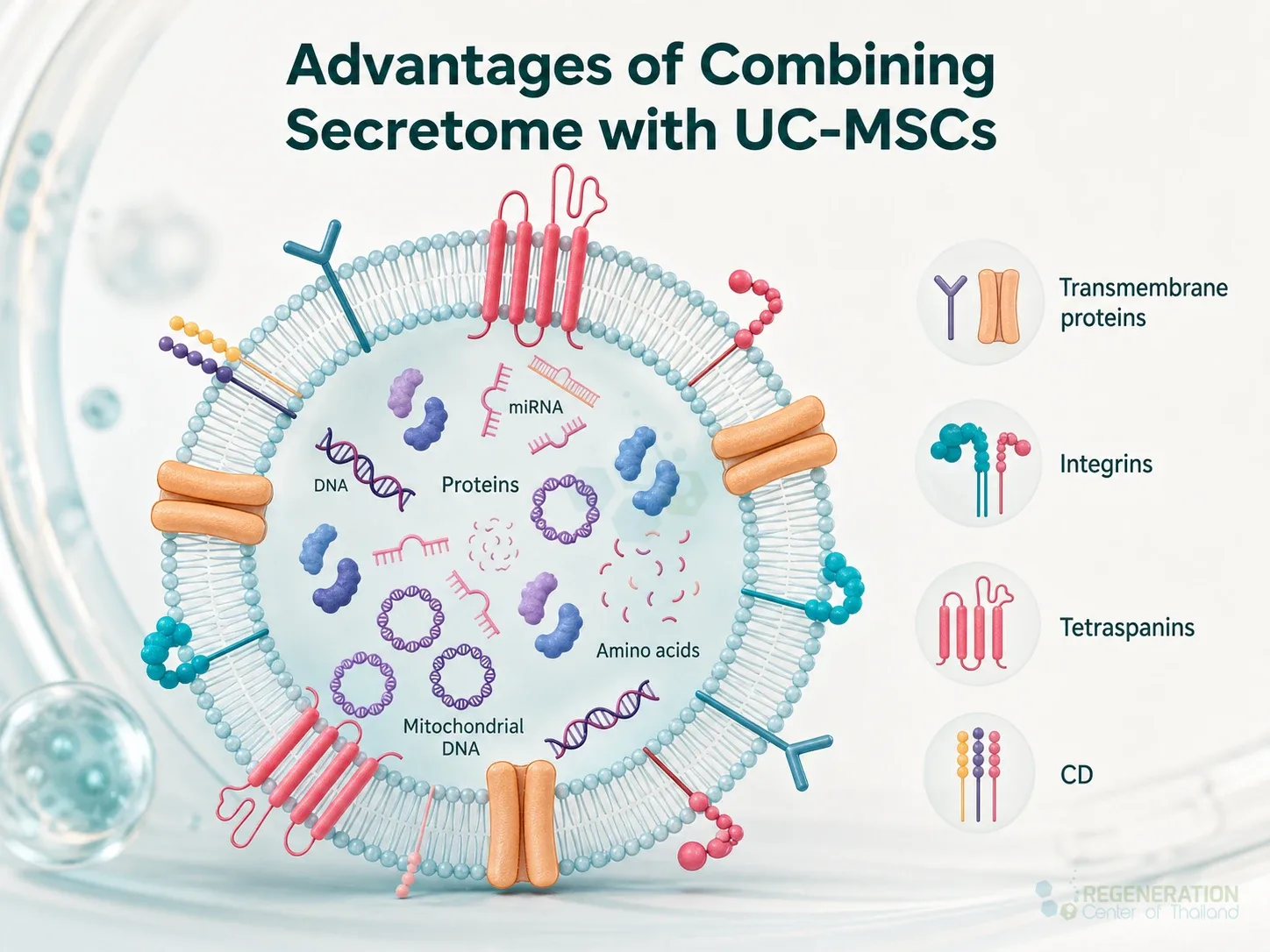 Adding the stem cell secretome to traditional cell therapy can address many of the challenges associated with using cells alone. At the Regeneration Center, we have found that this combined approach offers several important advantages over standard stem cell treatments, particularly when we use Wharton’s jelly–derived UC-MSCs together with their secretome:
- Reduced risk of immune rejection or tumors: Because secretome therapy uses only cell-derived factors (and not live donor cells in every infusion), the risk of an immune reaction is extremely low, and there is virtually no chance of uncontrolled cell growth or tumor formation from the secretome component. This is especially helpful for patients with dementia, transverse myelitis, or Guillain-Barré syndrome, where safety margins are critical.
- Consistent quality: Secretome products can be produced in controlled lab batches with strict quality checks. Each dose can be tested to ensure it has consistent levels of key factors and is free of contaminants, leading to a safer, more reliable therapy that complements individualized functional medicine plans.
- Easier storage and applications: The secretome, especially in a concentrated or dried form, is more stable and easier to store than live cells. It does not require cryogenic (ultra-cold) storage or immediate use, simplifying logistics and making combined treatments more accessible for international patients, given the overall treatment costs and logistics in Thailand.
- Targeted treatment design: By engineering the secretome’s content, treatments can be tailored to specific conditions. For example, exosomes might be loaded with specific therapeutic molecules to target diseased tissue directly, improving precision and minimizing side effects in other organs. This precision is valuable in complex cases such as idiopathic pulmonary fibrosis, acute pancreatitis, metabolic diseases, or progressive colorectal cancers.
Current Clinical Applications and Treatment Areas
Stem cell secretome therapy is being investigated in a variety of medical conditions. In cardiology, for example, injecting secretome into the heart after a heart attack has shown signs of improved heart function and tissue repair. Patients with myocardial infarction, heart failure, or chronic coronary artery disease may benefit from better blood flow, reduced scarring, and improved pump function when the secretome is integrated with cell-based cardiac repair.
In wound care, secretome-based treatments have accelerated the healing of stubborn skin ulcers by boosting tissue regeneration and blood flow. This is particularly relevant for patients with long-standing type 1 and type 2 diabetes, where poor circulation and peripheral neuropathy can delay healing and increase the risk of amputation.
We have successfully used secretome infusions to treat strokes, spinal cord injuries, degenerative disc disease (DDD), liver disease, kidney failure, COPD, idiopathic pulmonary fibrosis (IPF), and pancreatitis. We have also found that using secreted factors can protect neurons and promote new nerve connections for patients with ALS, MND, and dementia. In orthopedics, early studies suggest secretomes may help reduce joint inflammation and stimulate cartilage repair in degenerative joint disease, knee arthritis, shoulder injuries, hip injuries, and hand and wrist arthritis. Even in ophthalmology, conditions such as macular degeneration are being explored, with evidence that secretome factors might protect retinal cells and support vision recovery; however, the Regeneration Center does not offer any vision-related treatments at this stage.
To give a clearer picture of how we apply secretome in practice, many of our combined UC-MSC plus secretome protocols are used for:
- Stroke rehabilitation and post-stroke aphasia
- Spinal cord injury and transverse myelitis
- Degenerative disc disease, Cervical Spine Injuries, and sciatic nerve–related pain
- Knee Injuries, shoulder injuries, and rotator cuff tears
- Hip injuries and cartilage, ligament, and tendon injuries
- Wrist fractures and hand/finger injuries
- Alzheimer’s disease and dementia, Parkinson’s disease, multiple sclerosis, and motor neuron disease
- COPD and emphysema, idiopathic pulmonary fibrosis, and cystic fibrosis
- Liver cirrhosis and chronic liver disease, chronic kidney disease, and polycystic kidney disease
- Pediatric neurodevelopmental conditions such as autism spectrum disorder and selected cases of cerebral palsy, when age and safety criteria are met
Future Prospects and Emerging Technologies
To fully unlock the potential of stem cell secretomes, scientists are developing new technologies to overcome current limitations. Several promising innovations are on the horizon:
- Advanced bioreactors and 3D cultures: Next-generation bioreactors (including 3D culture systems) are being developed to give cells optimal growth conditions. These systems can boost the quantity and consistency of secretome produced by cells and support more sophisticated regenerative medicine protocols.
- Targeted delivery with nanotechnology: Scientists are exploring nanotechnology to deliver the secretome’s factors with greater precision. Tiny nanoparticle carriers (or even stem cell-derived exosomes themselves) can be engineered to deliver healing factors directly to injured tissues, helping the signals reach the target area and remain active longer, thereby further improving outcomes in complex cases.
Stem cell secretome science is transforming the landscape of regenerative medicine. By harnessing the healing signals that stem cells naturally produce, secretome-based therapies (especially when combined with stem cell transplants) could help repair tissue damage in ways previously impossible. Already, our early clinical applications have shown encouraging outcomes in heart repair, wound healing, nerve regeneration, and more. While challenges still need to be overcome before secretome-enhanced treatments become mainstream, rapid advances in biotechnology are quickly paving the way. At the Regeneration Center, we are excited to be at the forefront of this revolution, striving to bring our patients the safest, most effective, and cutting-edge regenerative therapies available. Patients who wish to learn more about their specific condition can review our treatment overview pages, explore detailed information about our medical team, or read our frequently asked questions before requesting a personalized evaluation.