
Nearly 50% of rotator cuff surgeries are estimated to fail to improve the patient’s condition. Often, patients were better off without surgery. The Regeneration Center offers orthopedic protocols that provide an effective alternative to shoulder surgery through UC-MSC+ stem cell therapy. We now provide a powerful solution for men and women suffering needlessly from degenerative shoulder pain, knee injuries, or sports injuries, hand and wrist injuries. The most common type of shoulder issues includes torn or managed rotator cuffs, shoulder labrum injuries, and the need for shoulder joint replacement due to severe degenerative effects of osteoarthritis and myositis, an autoimmune disease involving chronic inflammation in the shoulders, which can lead to spondyloarthritis.
Labral tears and Rotator cuff injuries
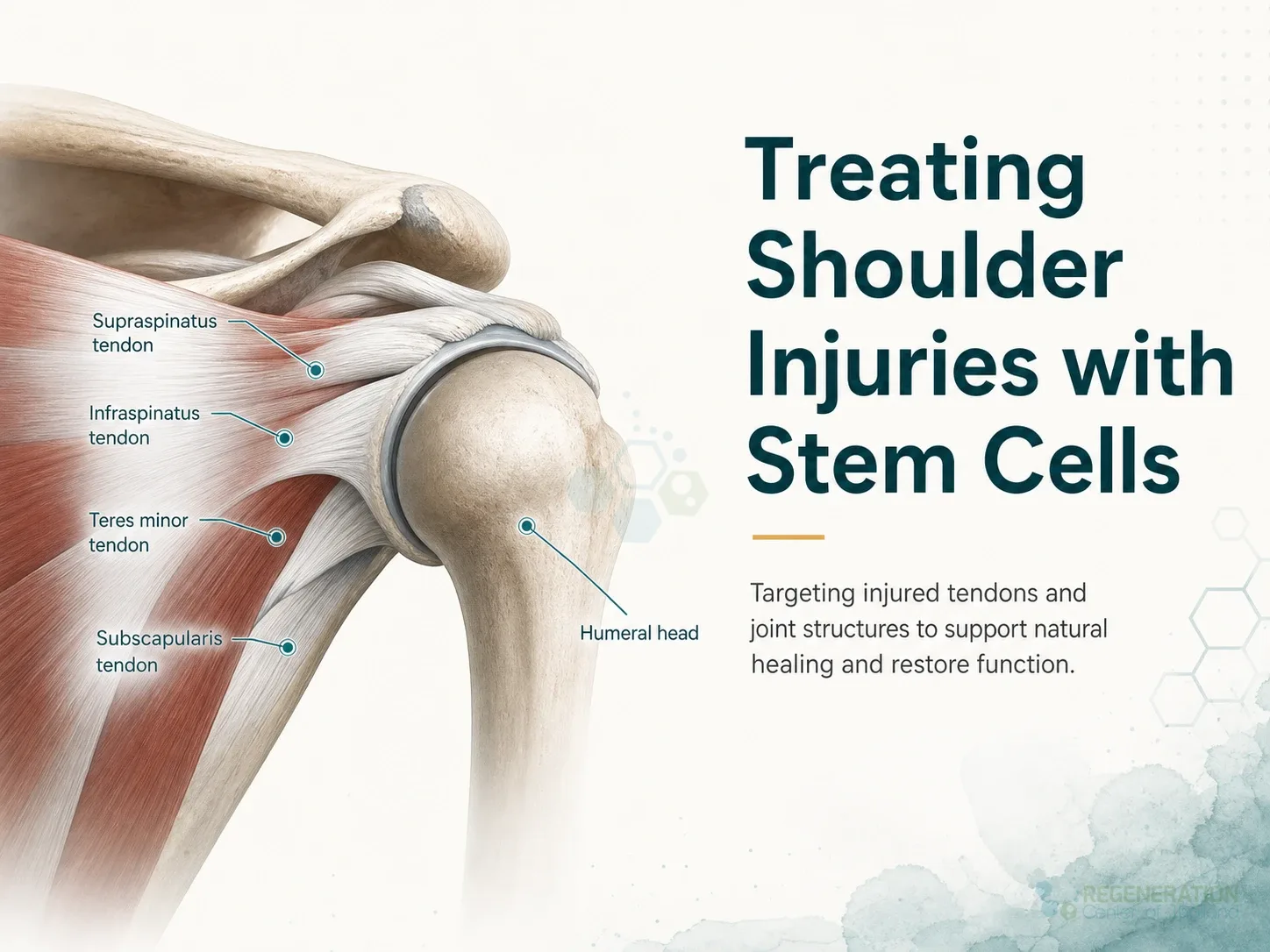
Our shoulder is one of the human body’s most complex and versatile socket-and-ball joint systems. However, the socket and joint connections are relatively shallow and require the assistance of four tendons, collectively known as the Rotator Cuff, to keep the ball firmly in place during physical rotation and lifting weights. The shoulders are constantly being put through extensive wear and tear that can sometimes lead to injuries and chronic pain.
Common Shoulder injuries include:
- AC Shoulder Joint Separation
- Rotator Cuff Tears and Injuries
- Labral degeneration and labral tears
- Frequent shoulder dislocations
- Tendonitis of the Rotator Cuff
- Thoracic outlet syndrome
- Shoulder joint Arthritis
Unfortunately, these injuries are also among the most challenging to repair surgically. It is estimated that nearly 60% of all Arthroscopic shoulder surgeries fail to heal properly, resulting in a weak range of motion and lack of strength, leading to a high risk of injury by “retears” in the tendon. It’s important to note that the shoulders did not heal naturally because our bodies cannot use paracrine signaling to recruit circulating stem cells to the shoulder and initiate the natural cell-restoration cycle.
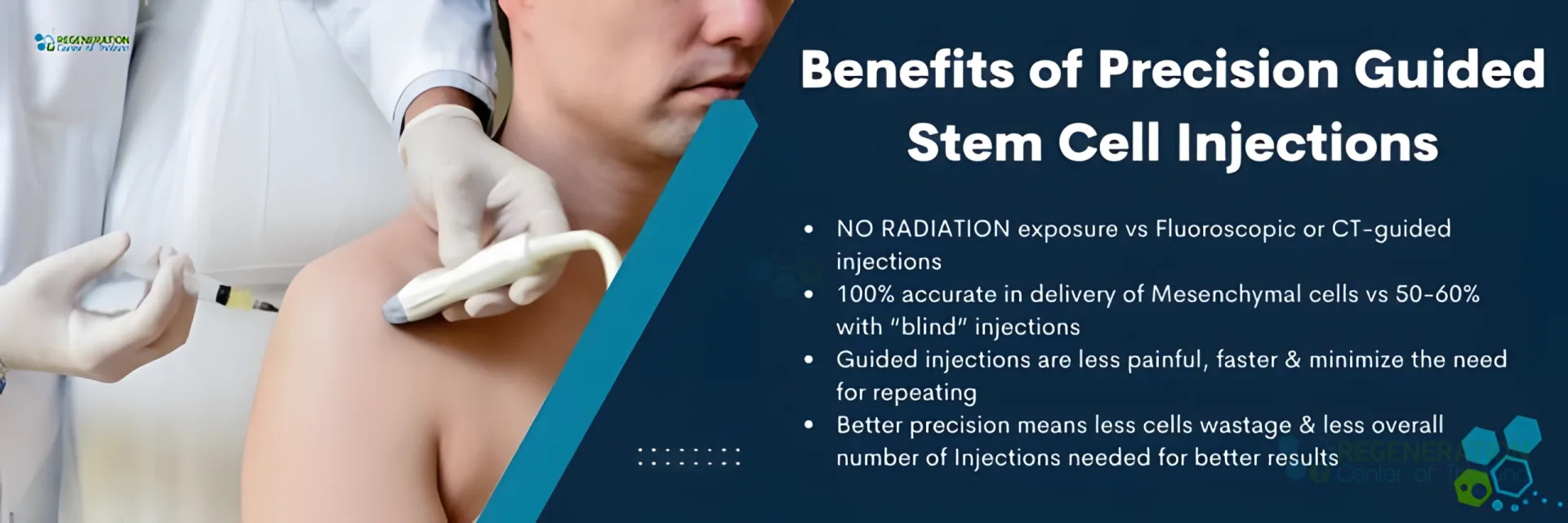
Ortho+ Mesenchymal Stem Cell therapy can be appropriate for treating:
- Labral tears, SLAP Tears, Glenoid Labrum Tears, Shoulder Joint Tears
- Partial tears of the rotator cuff, Rotator cuff tendinitis ( Partial-thickness tears)
- Mild to moderate shoulder joint osteoarthritis, sarcopenia, femoral nerve damage, and Primary osteoporosis
- Joint pain due to Lupus
- Shoulder muscle strains and sprains
Tissue Regenerative Therapies might not be appropriate for:
- Complete separation of rotator cuffs, complete tears leading to peripheral neuropathy
- Severe Degenerative Osteoarthritis in the knee or shoulder Joint
Treating Shoulder Injuries with Stem Cells
Our bodies consist of billions of specialized stem cells that help to form our muscles, brain, ligaments, skin, bones, tendons, and joints. Every day, our cells undergo a natural process of regeneration and death. When old and injured cells die, our bodies replace them with new cells. This is the primary process and function of regenerative medicine. As we age, this process becomes weaker and weaker. Sometimes, our injured cells cannot heal as effectively as before, causing the degenerative process to continue. This results in our tissues and tendons becoming less functional, weak, and often painful. To learn more about stem cells, click here.
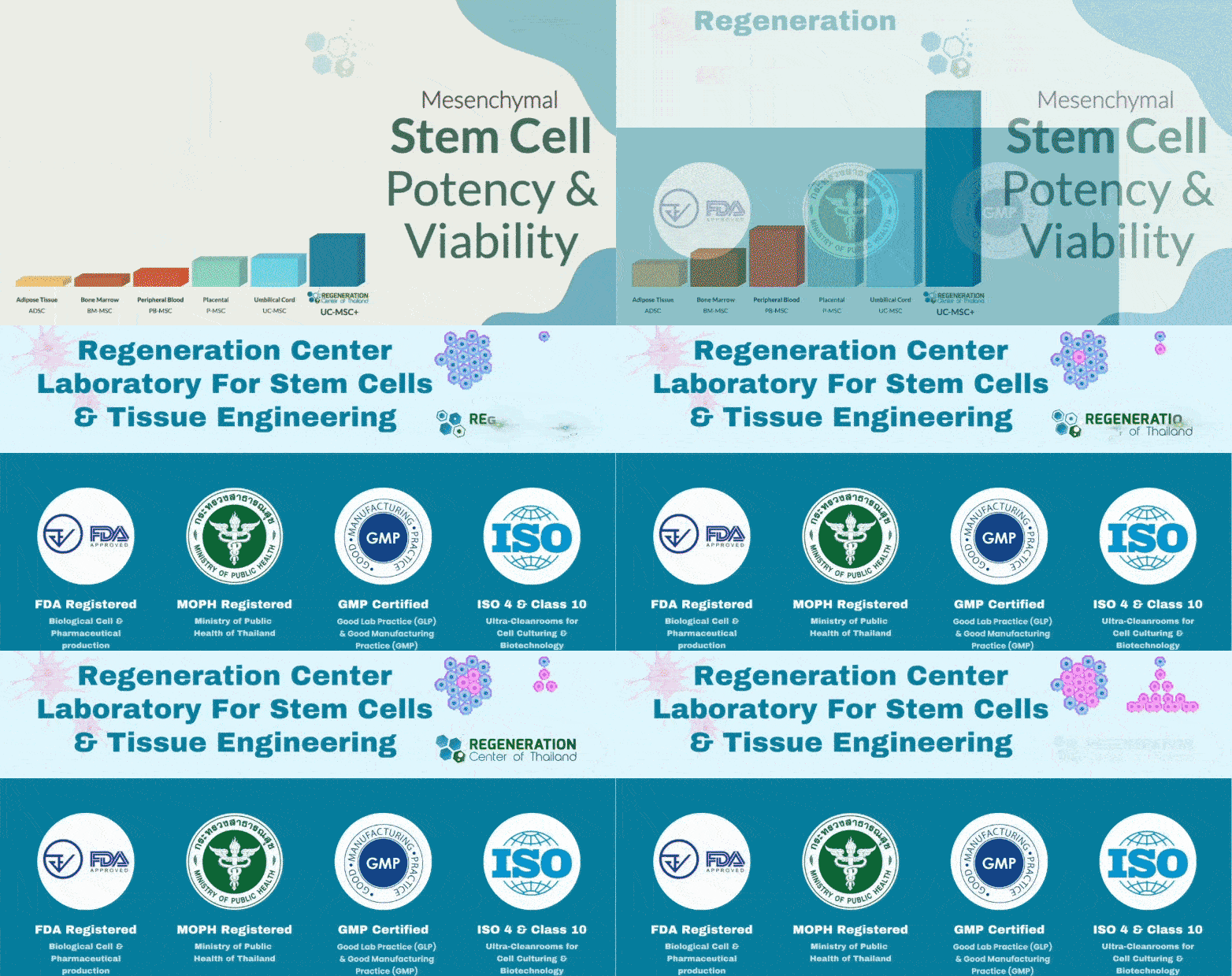
There are several types of cells in our bodies, but the most effective cells for musculoskeletal healing in our tendons, bones, ligaments, and cartilage are Hematopoietic Mesenchymal Stem cells. Mesenchymal Stem cells are produced in our bone marrow but can also be harvested from peripheral blood, adipose tissue, or dental pulp.
Alternative to Shoulder Surgery
The Regen Center orthopedic stem cell treatments for hip injuries and stem cell therapy for rotator cuff tears utilize high concentrations of enriched Hematopoietic Mesenchymal Stem cells & PRP, allowing for a unique protocol that uses multiple non-painful injections of adult stem cells that allow for safe and natural healing of your shoulder injury without any downsides associated with surgical interventions.[[1]
Rotator Cuff Surgery Vs. Stem Cell Shoulder Regeneration
Surgical Option
- 6-8 weeks of wearing a shoulder brace
- Restricted movements for up to 4 months
- High Failure Rate ( Up to 50% of all Surgeries fail)
- Risk of infections and blood clots after surgery
- Long & Painful Rehab
- Five months to 14 months for complete recovery
Stem Cell Shoulder Repair @ Regen Center ( NON-SURGICAL )
- Non-Surgical
- Enriched Mesenchymal injections [2]
- Minimal activity restrictions
- Minimal downtime
- Higher success rates with years of successful outcomes using osteogenic stem cells
- No Need for Physical Braces
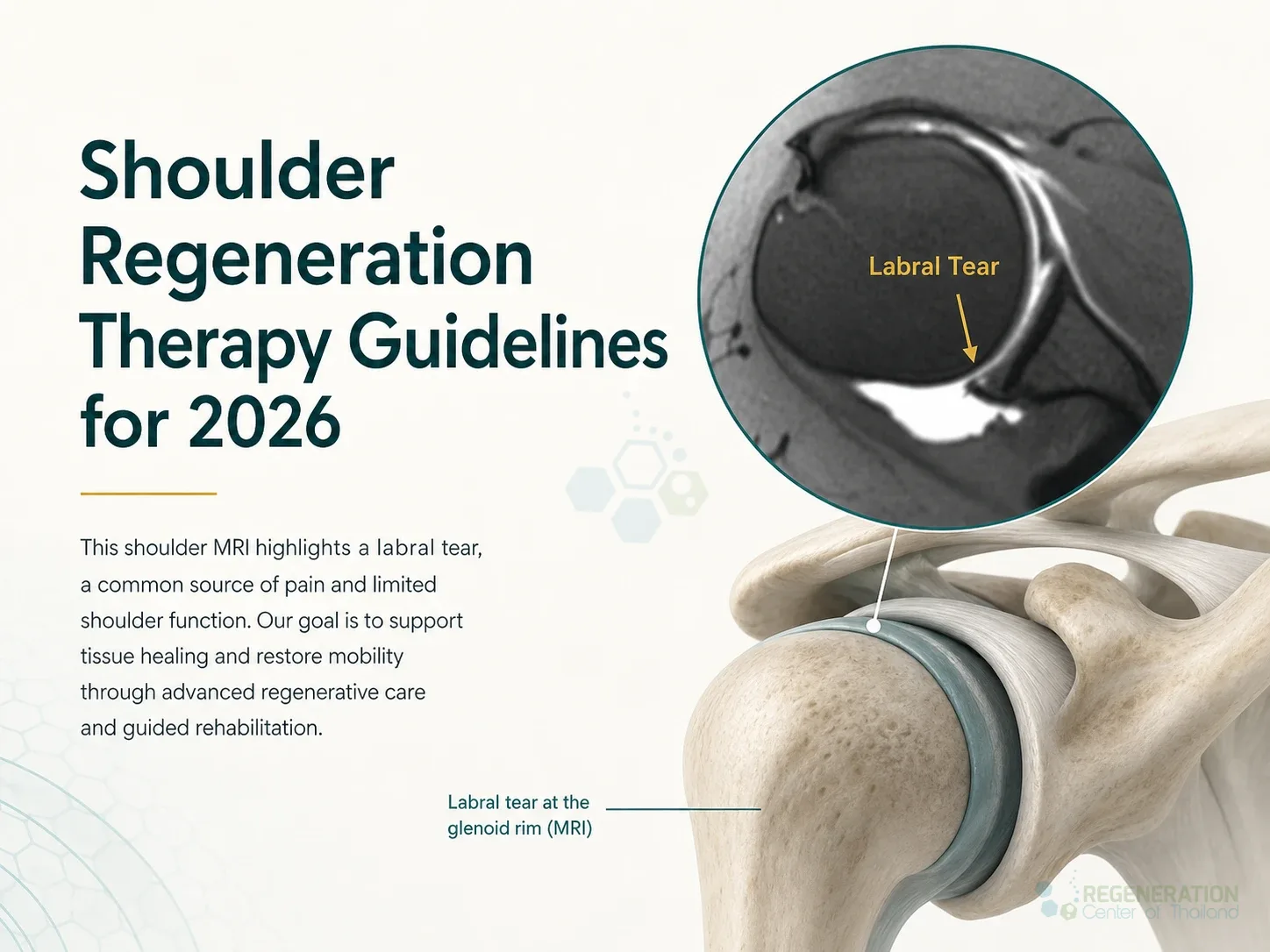
Shoulder Regeneration Therapy Guidelines for 2026
The total number and types of cell Infusions will depend on the scope and severity of the injury.
Type of Cells Used and Injection Locations: Cells used in treatment are enhanced mesenchymal Stem cells (UC-MSC+) with tissue-specific growth factors to promote the production of fibrocartilage fibers. Enhanced tissue-derived cells may be needed for patients with older injuries or severe/multiple underlying health conditions. All localized cell injections are performed under local or topical anesthesia and delivered (homing) to the areas of injury through radio-guided intramuscular injections and Intravenous drips.[3]
Physical Rehabilitation After Treatment: The Regeneration Center recommends starting physical/shoulder rehab after all treatments. Depending on the patient’s schedule, physical rehab can be done in Bangkok or upon the patient’s return home. We offer optional physical rehab packages depending on your travel/time constraints. Our rehabilitation program is available upon request for 2-3 hours per day and up to 6 days per week. Thai Medical visas and hotel packages for the patient and family can also be provided upon request.
Total Treatment Length: The estimated treatment time in Bangkok required for our enhanced stem cell therapy to treat shoulder injuries is 10-14 days.
Cost of treating a rotator cuff and labrum shoulder tear
Due to the varying degrees of tendon/Labrum injuries, our orthopedic team must conduct a virtual consultation with the patient. This medical review can be submitted online using the patient’s medical records and radiological results, such as MRI scans or CT Scans. Once our review is complete, we can determine whether the patient is a candidate for treatment and provide a detailed plan that includes the specifics of the treatment, the exact number of nights required in Thailand, and total and fixed medical expenses (excluding accommodations or flights).
Are you looking to Relieve Shoulder Pain w/o surgery?
Current surgical techniques for treating shoulder injuries or repairing rotator cuffs do not achieve good tendon-to-bone healing. The use of UC-MSC+ stem cells is a promising alternative for improving healing. If you or a loved one is suffering from a degenerative shoulder condition, chronic rotator cuff, and labrum pain, or if you have any difficulty raising your arms laterally, you may be a candidate for our procedure.
To learn more about the best foods for shoulder arthritis or the best alternative to shoulder surgery, please contact us today.
Published Clinical Citations
[1] ^ Beitzel, Knut, Olga Solovyova, Mark P Cote, John Apostolakos, Ryan P Russell, Mary Beth McCarthy, and Augustus D Mazzocca. 2013. The future role of mesenchymal stem cells in the management of shoulder disorders. Arthroscopy : the journal of arthroscopic & related surgery : official publication of the Arthroscopy Association of North America and the International Arthroscopy Association, no. 10 (August 21). doi:10.1016/j.arthro.2013.06.014. https://www.ncbi.nlm.nih.gov/pubmed/23972267
[2] ^ Shen, Weiliang, Jialin Chen, Zi Yin, Xiao Chen, Huanhuan Liu, Boon Chin Heng, Weishan Chen, and Hong-Wei Ouyang. 2012. Allogenous tendon stem/progenitor cells in silk scaffold for functional shoulder repair. Cell transplantation, no. 5 (March 8). doi:10.3727/096368911X627453. https://www.ncbi.nlm.nih.gov/pubmed/22405331
[3] ^ Utsunomiya, Hajime, Soshi Uchida, Ichiro Sekiya, Akinori Sakai, Kuniaki Moridera, and Toshitaka Nakamura. 2013. Isolation and characterization of human mesenchymal stem cells derived from shoulder tissues involved in rotator cuff tears. The American journal of sports medicine, no. 3 (January 31). doi:10.1177/0363546512473269. https://www.ncbi.nlm.nih.gov/pubmed/23371475