
You already know what you should be doing for your health. So why is it so hard to actually do it?
Most of us can rattle off the basics without thinking. Exercise regularly. Eat well. Sleep enough. We have more fitness trackers, meal-planning apps, and motivational podcasts at our fingertips than any generation before us. And yet, rates of chronic lifestyle-related disease continue to climb worldwide.
The problem, it turns out, is rarely a lack of knowledge. It’s a lack of follow-through. And a growing body of research suggests that a surprisingly simple practice, one that requires no equipment, no gym membership, and as little as ten minutes a day, could be the thing that finally helps you stick with your health goals.
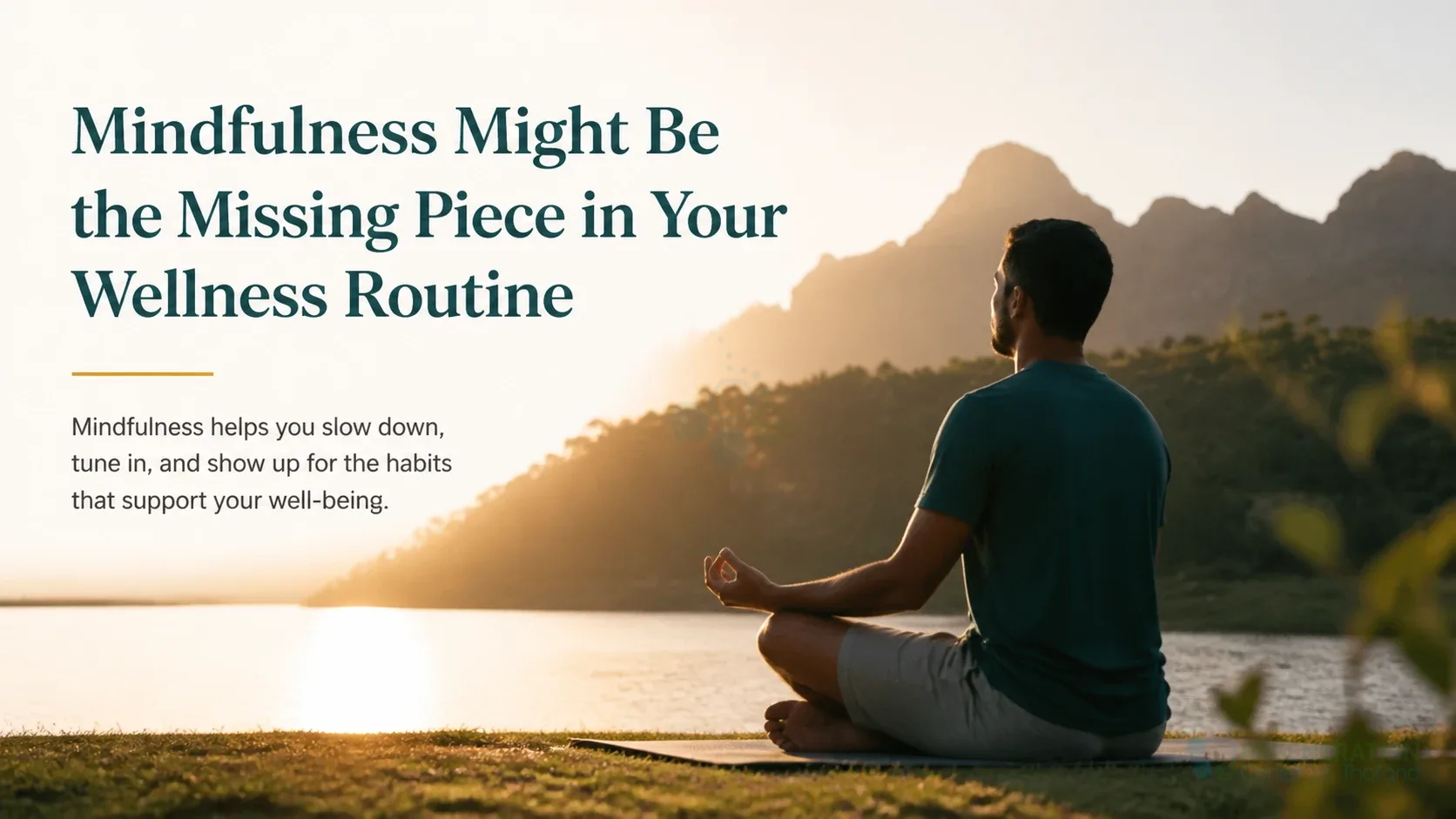
That practice is mindfulness.
What Mindfulness Actually Is (and Isn’t)
The word “mindfulness” gets thrown around a lot these days. You’ll find it in corporate wellness programs, elementary school curricula, and first responder training. But beneath the buzzword, the concept is straightforward.
Mindfulness is the act of paying careful, nonjudgmental attention to your present-moment experience. That means noticing your thoughts, your breath, your body, and your surroundings without rushing to label them as good or bad. Its roots trace back to ancient Buddhist traditions that began in India and later spread across Asia, including Thailand. Over the past five decades, researchers have adapted these ancient practices into structured Western therapeutic programs and stress-management tools. The result is a well-studied intervention with a surprisingly wide range of documented benefits.
It is not about emptying your mind. It is not about forcing yourself to relax. And it certainly is not a replacement for medical treatment when you need it. What it is, at its core, is a skill. And like any skill, it gets stronger with practice.
What the Research Actually Shows
The scientific evidence behind mindfulness is more robust than many people realize. Mindfulness-based programs (delivered both in person and through digital platforms) have been shown to effectively reduce symptoms of depression and anxiety, protect against burnout, improve sleep quality, and reduce pain perception, according to research reviewed by Masha Remskar, a psychologist and behavioral scientist.
But the benefits extend well beyond how you feel in the moment. Studies have found that experienced meditators (those who have been practicing for at least a year) show lower markers of inflammation. That matters because chronic inflammation is linked to a long list of health problems, from heart disease, such as dilated cardiomyopathy (DCM), to autoimmune conditions. These long-term practitioners also demonstrated improved cognitive function, less brain fog, and measurable changes in brain structure.
What excites researchers most, though, is something more practical: mindfulness appears to help people build and maintain healthy habits.

The Habit Problem (and How Mindfulness Solves It)
Here is the core issue with most health goals. Knowing what to do is the easy part. Actually showing up day after day, especially when life gets busy, uncomfortable, or discouraging, is where most people fall off. Remskar’s team has been studying exactly this gap. Their research suggests that mindfulness equips people with the psychological skills to change their behavior and, more importantly, sustain that change over time.
A 2024 randomized controlled trial led by Remskar, published in the British Journal of Health Psychology, enrolled over 1,200 adults from 91 countries. Participants were randomly assigned to either a month-long daily mindfulness routine (using the free Medito app) or a control group that listened to excerpts from Alice in Wonderland. The mindfulness sessions lasted about ten minutes each and included relaxation exercises, intention-setting, body scans, breath-focused attention, and self-reflection.
The results were striking. Compared to the control group, participants in the mindfulness group reported depression scores that dropped by 19.2% more, anxiety that decreased by 12.6% more, and well-being that improved by 6.9% more. But beyond these mental health gains, meditators also showed more positive attitudes toward healthy habits and stronger intentions to follow through.
Multiple other studies have confirmed a similar pattern: people who meditate regularly for at least two months tend to become more intrinsically motivated to take care of their health. That kind of internal motivation (wanting to be healthy because it matters to you, not because someone told you to) is consistently linked with better long-term adherence to diet and exercise.
Why It Works: Reconnecting with Your Body
So what is it about sitting quietly and breathing that makes someone more likely to hit the gym or choose the salad?
Remskar’s research points to two key mechanisms:
- Mindfulness encourages self-reflection and helps people feel more connected to their own bodies. When you regularly tune in to how you physically feel, it becomes easier to remember why being healthier matters to you personally. It shifts the motivation from external pressure (“I should lose weight”) to internal awareness (“I feel better when I move my body”).
- Mindfulness changes how people respond to discomfort, setbacks, and failure. This does not mean meditators stop feeling pain or frustration. It means they develop a different relationship with those experiences. Instead of interpreting a missed workout or a bad meal as proof that they have failed, they can observe the feeling, let it pass, and get back on track. That resilience is what separates people who maintain healthy habits from those who abandon them after a few weeks.
Where Mindfulness Fits in the Bigger Wellness Picture
Mindfulness is not a magic bullet. No single practice is. But it appears to function as a kind of force multiplier for other health behaviors, making it easier to exercise, eat well, sleep better, and manage stress by strengthening the psychological foundation on which those habits depend.
This idea, that true wellness requires attention to both mind and body, has been gaining traction across many areas of health science. Researchers and clinicians are increasingly recognizing that the most effective approaches to long-term health tend to combine multiple strategies rather than rely on any single intervention.
That same principle is driving interest in emerging fields such as regenerative medicine. Stem cell therapy, for example, is being studied for its potential to reduce chronic inflammation, support tissue repair, and improve overall vitality. A comprehensive analysis of over 1,100 stem cell clinical trials (published in 2025 in the International Journal of Surgery) found that mesenchymal stem cells show immunomodulatory and regenerative properties that may help address conditions resistant to conventional treatments.
While stem cell therapy for general wellness remains an area of active research rather than an established standard of care, the underlying idea resonates with what mindfulness research is also revealing: the body has a remarkable capacity for repair and self-regulation when given the right support. Whether that support comes from training the mind through meditation, or from exploring regenerative approaches at the cellular level, the direction of modern wellness research points toward working with the body’s own systems rather than against them.
It is worth being a thoughtful consumer of both. Mindfulness has decades of controlled research behind it and is accessible to nearly everyone. Regenerative therapies like stem cell treatment are still early in their evidence journey, but are progressing quickly. The most sensible approach for anyone serious about their long-term health is to stay informed, ask questions, and recognize that these different tools may eventually complement each other in ways we are only beginning to understand.
How to Actually Start (Without Overthinking It)
One of the best things about mindfulness is how low the barrier to entry is. You do not need to attend a silent retreat or adopt a new spiritual practice. Research suggests that even brief daily sessions can produce meaningful benefits.
Here are a few ways to begin now:
- Start with ten minutes. The 2024 trial that produced significant improvements in mental health and habits used daily sessions of about 10 minutes each. That is less time than most people spend scrolling social media each morning.
- Use “mindful moments” throughout your day. Take a few undistracted breaths while your coffee brews. Pay attention to the sensation of your feet on the ground during a short walk. Notice your breathing while riding an elevator. These small pauses count.
- Try mindful movement. If sitting still does not appeal to you, choose a physical activity and give it your full attention. A walk where you actively notice your surroundings and sensations is a form of mindfulness practice.
- Be patient. The research suggests that the most meaningful shifts in motivation and habit-building tend to emerge after about two months of regular practice. This is not an overnight fix. It is a skill you develop gradually.
We live in a time of extraordinary access to health information and tools. The challenge for most people is not figuring out what to do. It is finding the inner resources to keep doing it when motivation fades, when life gets complicated, when the couch looks a lot more appealing than the running trail. Mindfulness will not burn a single calorie. It will not replace your doctor’s advice or make difficult health decisions for you. But the evidence increasingly suggests it can strengthen the one thing that matters most for lasting change: your ability to show up for yourself, day after day, with awareness and without judgment.
And that, according to the science, might make all the difference.
RESOURCES
- Remskar, M., Western, M. J., & Ainsworth, B. (2024). “Mindfulness improves psychological health and supports health behaviour cognitions.” British Journal of Health Psychology. | Remskar, M. (2025). “Mindfulness won’t burn calories, but it might help you stick with your health goals.” The Conversation. | Remskar, M. et al. (2023). “Effects of combining physical activity with mindfulness on mental health and wellbeing.” Mental Health and Physical Activity. | Wu, D. et al. (2025). “Clinical trial landscape for stem cells in autoimmune and inflammatory diseases.” International Journal of Surgery.*
- Ngamkham S, Yang JJ, Smith EL. Thai Buddhism-Based Mindfulness for Pain Management in Thai Outpatients with Cancer: A Pilot Study. Asia Pac J Oncol Nurs. 2020 Oct 15;8(1):58-67. doi: 10.4103/apjon.apjon_43_20. PMID: 33426191; PMCID: PMC7785079.