
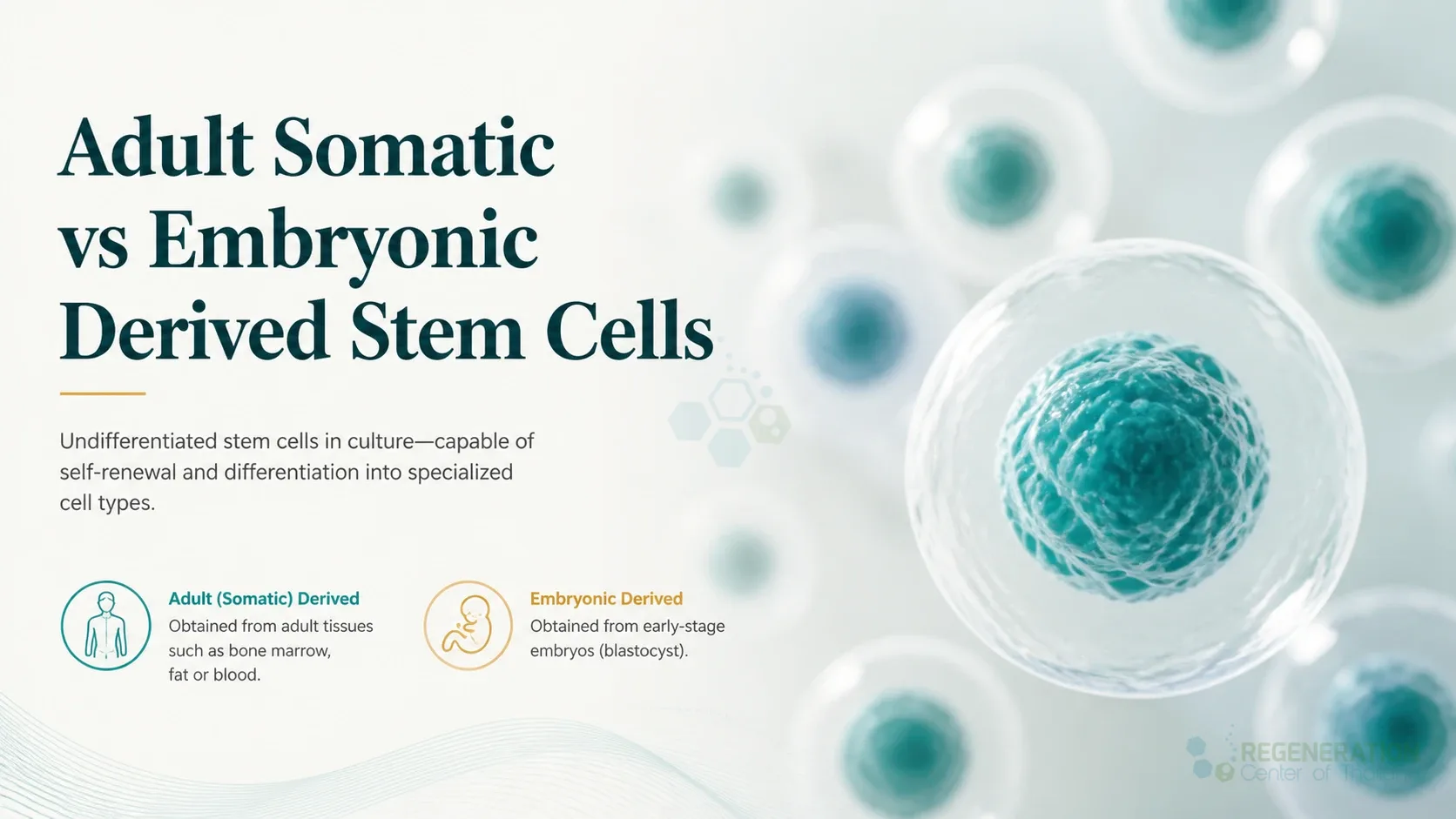
Embryonic and Adult stem cells, or somatic stem cells, are among the most common sources of bioengineered cell-based regenerative medicine today. Adult “post-natal” stem cells are sometimes referred to as somatic stem cells.
Somatic Stem Cell Transplants
The main function of somatic stem cells in your body is to maintain tissue health, or “homeostasis,” by ensuring your body naturally replenishes damaged cells through the process of senescence. Your body’s repair is mediated and controlled by your stem cells. Adult stem cells or somatic stem cells, along with other types of stem cells derived from placenta, cord blood, and embryos, are all believed to have the capability to self-renew and regulate themselves, along with the remarkable ability to differentiate into any type of specialized cell types in your body, such as blood, tissue, bone, skin cells, etc. The potential for somatic stem cells to trans-differentiate is the foundation for the treatments we offer at the Regeneration Center. Your somatic stem cells have significant implications and applications for our regenerative medicine techniques. Somatic-derived stem cells have been used to treat a wide variety of illnesses, ranging from tissues and organs, including the liver, lungs, brain, and heart, to external epithelial tissues, such as skin grafts, to heal burns and accident scars.
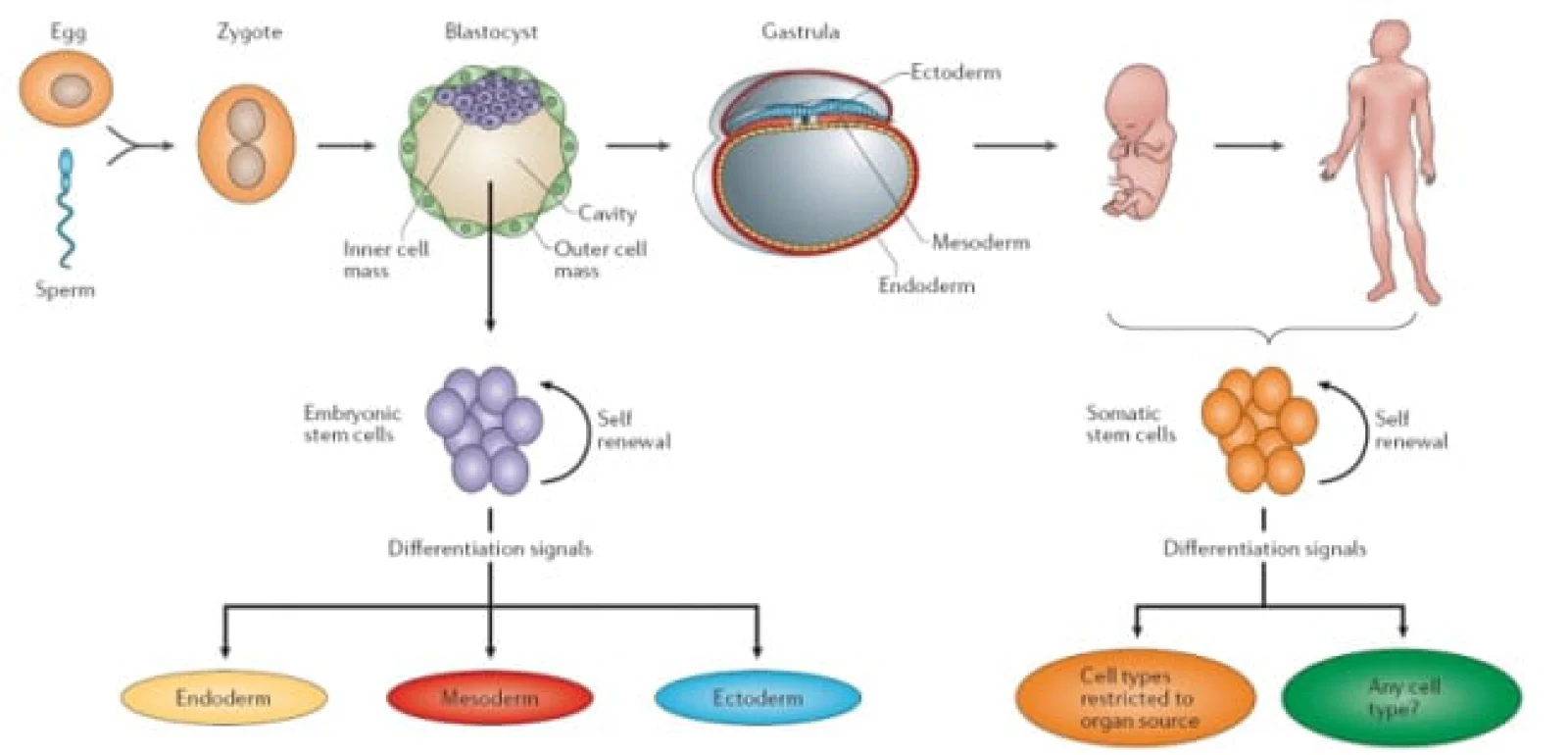
The processes of deriving somatic cells and embryonic stem cells are very different. Our treatments primarily used autologous somatic stem cells or matched, donated allogeneic mesenchymal stem cells from cord blood, placenta, and dental pulp. Embryonic-derived stem cells are no longer necessary, as modern regenerative science has discovered new, less controversial methods for deriving stem cells that yield better, more consistent results for our mesenchymal-enriched stem cell therapy.
The fusion of egg and sperm gametes during conception initiates the human fertilization cycle, in which the diploid zygote undergoes a multi-stage process of cellular divisions that ultimately results in a multicellular human embryo. The next stage of the cycle is called a “blastocyst” and is characterized by the presence of an outer and inner cell mass, known as the “blastocyst cavity.”
Embryonic stem cells are generally derived exclusively from the inner cell mass of the blastocyst. Embryonic stem cells are extremely powerful, fully capable of self-renewal and of differentiating into all cell types from the mesoderm, ectoderm, and endoderm lineages.
Somatic stem cells are also present in many fetal and postnatal tissues, such as liver cells, bone marrow, adipose tissue, peripheral blood, and even teeth. Like embryonic-derived stem cells, somatic or adult-derived “post-natal” stem cells are also capable of self-renewing and differentiating into other cell types and lineages, although not to the same extent or with the same uncontrollable nature as embryonic-derived stem cells. Motor neuron stem cells and functional medicine for cognitive decline are the most widely used lines of stem cells in the treatment of Diabetes, cerebral palsy, heart disease, DCM, and stem cell transplants for kidney disease.
To learn more about adult somatic stem therapies at the Regeneration Center, please contact us today.