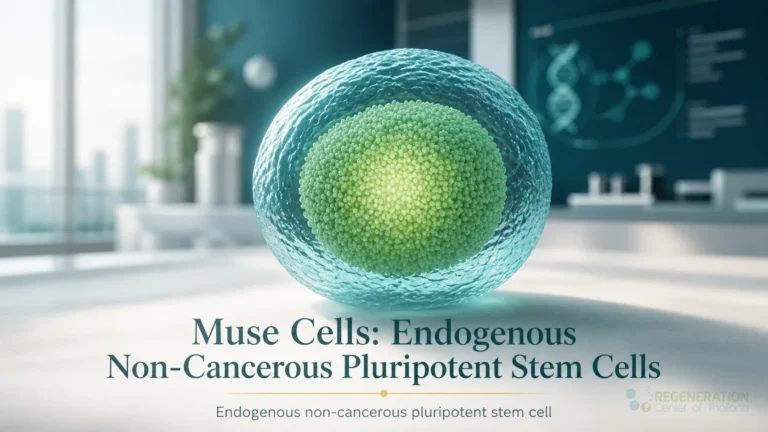

Stem cell therapies in Thailand are part of a developing field of regenerative medicine, and most of their uses remain investigational. Scientists and researchers are studying new sources of adult stem cells for conditions such as Diabetes, ALS, Spinal Cord injuries and kidney failure. Cell Assisted breast reconstruction surgery, which uses a person’s own fat and stem cells, is also being studied. Stem cells have the unique ability to grow or “differentiate” into many different kind of cells. Stem cells can be pictured as a basically the mother of all cells that has the ability to give “birth” to different typos of baby cells such as skin cells, cardiac heart cells,tooth cells,blood cells and brain cells.
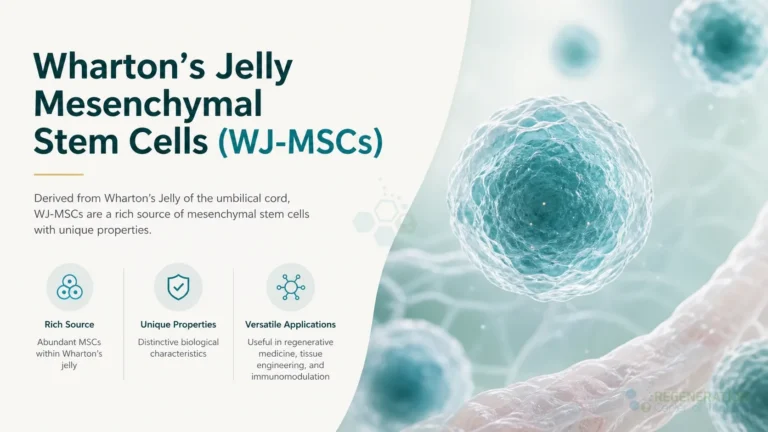
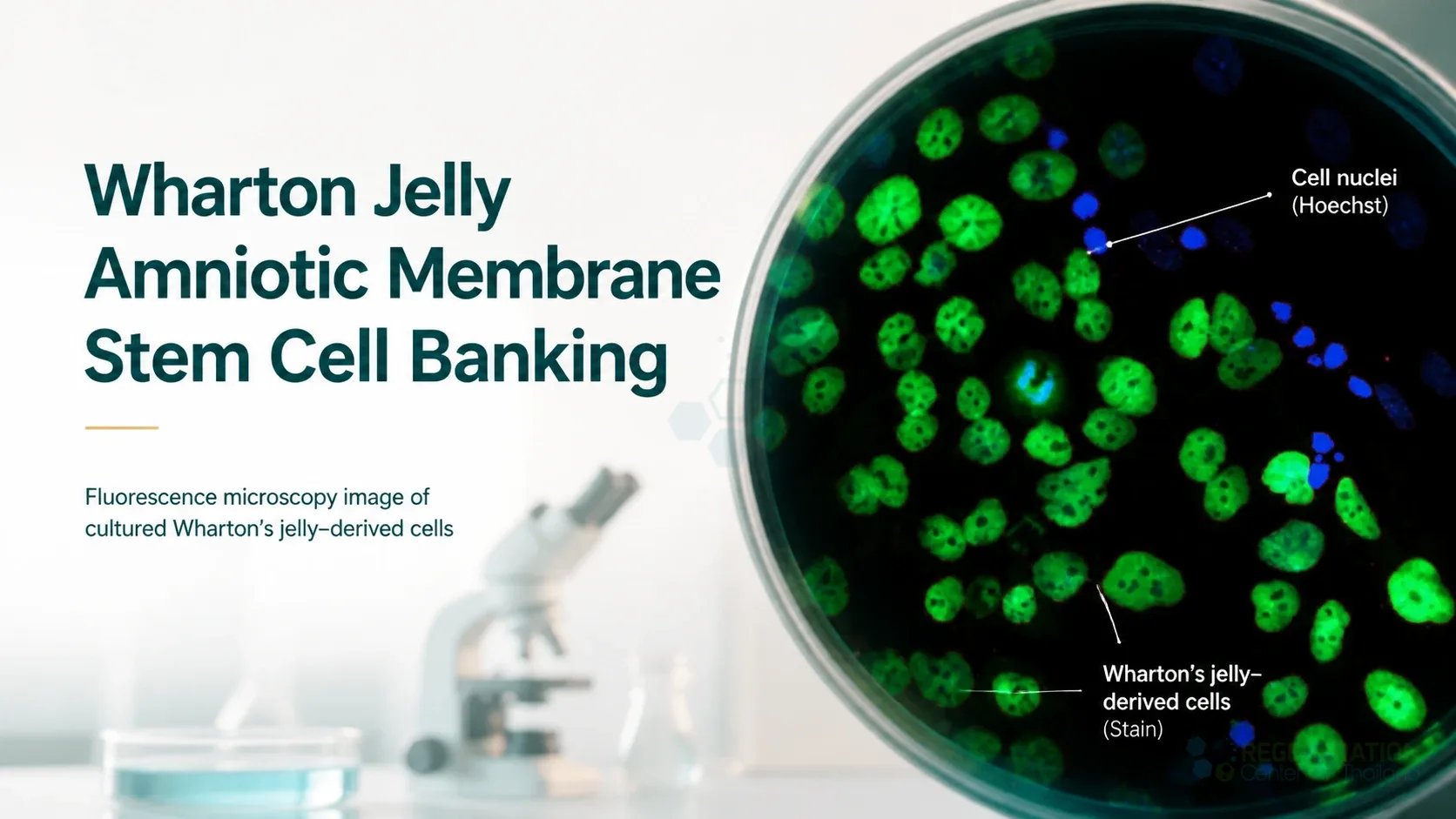
In 1656, Thomas Wharton described the gelatinous substance inside the umbilical cord in his publication Adenographia or The Description of the Glands of the Entire Body. This gelatinous substance was later named after himself or Wharton’s jelly. One hypothesis is that, during early embryonic development, primitive stem cells migrating between the region near the developing kidneys and the fetal liver pass through the umbilical cord, and some become trapped in Wharton’s jelly. These cells, now called umbilical cord matrix or Wharton’s jelly mesenchymal stromal cells, are thought to keep their stem cell properties.
Wharton’s Jelly Use & Function
Wharton jelly supports and insulates the arteries and veins inside the umbilical cord. After birth, exposure to the cooler outside temperature causes Wharton’s jelly to collapse around the cord vessels, which helps the cord close naturally within minutes.
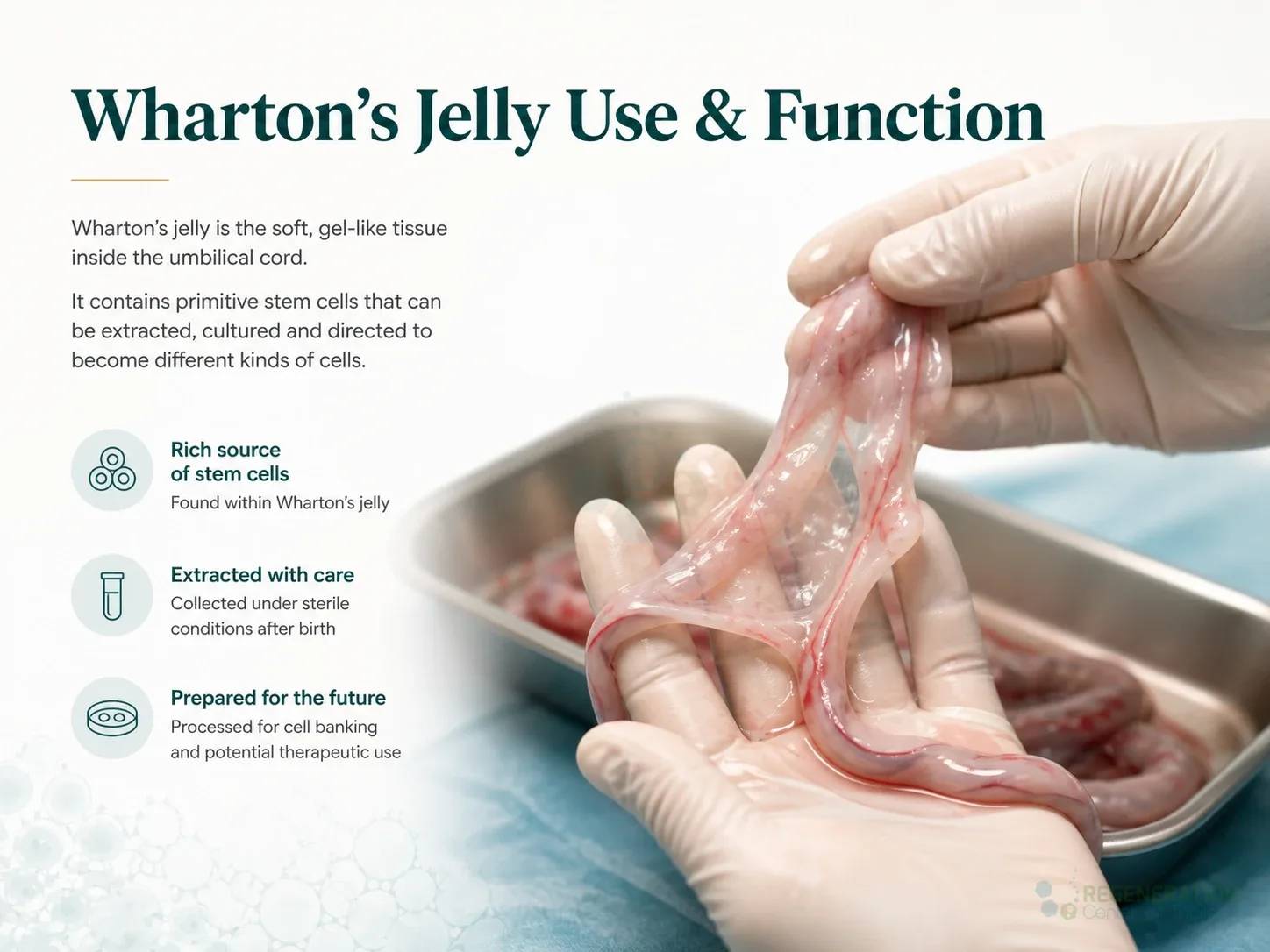
Nowadays, the primitive but very portent stem cells in the Wharton jelly can be extracted and cultured to become differentiated into different kinds of cells.
The discovery of the great potential of these stem cells is said to be potentially one of medicine’s greatest innovations.
Wharton Jelly Banking in Thailand
Since stem cell therapy is becoming more popular, some parents are considering preserving their child’s umbilical cord tissue stem cells through Wharton jelly banking, which is separate from cord blood banking. Though Wharton jelly stem cells can be obtained via donation fairly easily, it is always advised to have a close family genetic match that can be easily used during stem cell therapies without fear of rejection. Donated stem cells carry risks, including immune reactions to cells that are not a close match. This happens mainly by a person’s immune system that recognizes its own signature of body cells and considers all other cells to be foreign invading bodies that should be destroyed immediately . Securing your own personalized family source of stem cells may save you a lot of efforts,money and time in finding a perfectly matched cell type via public stem cell banks. In many countries around the world, public stem cell banks are not even an option.
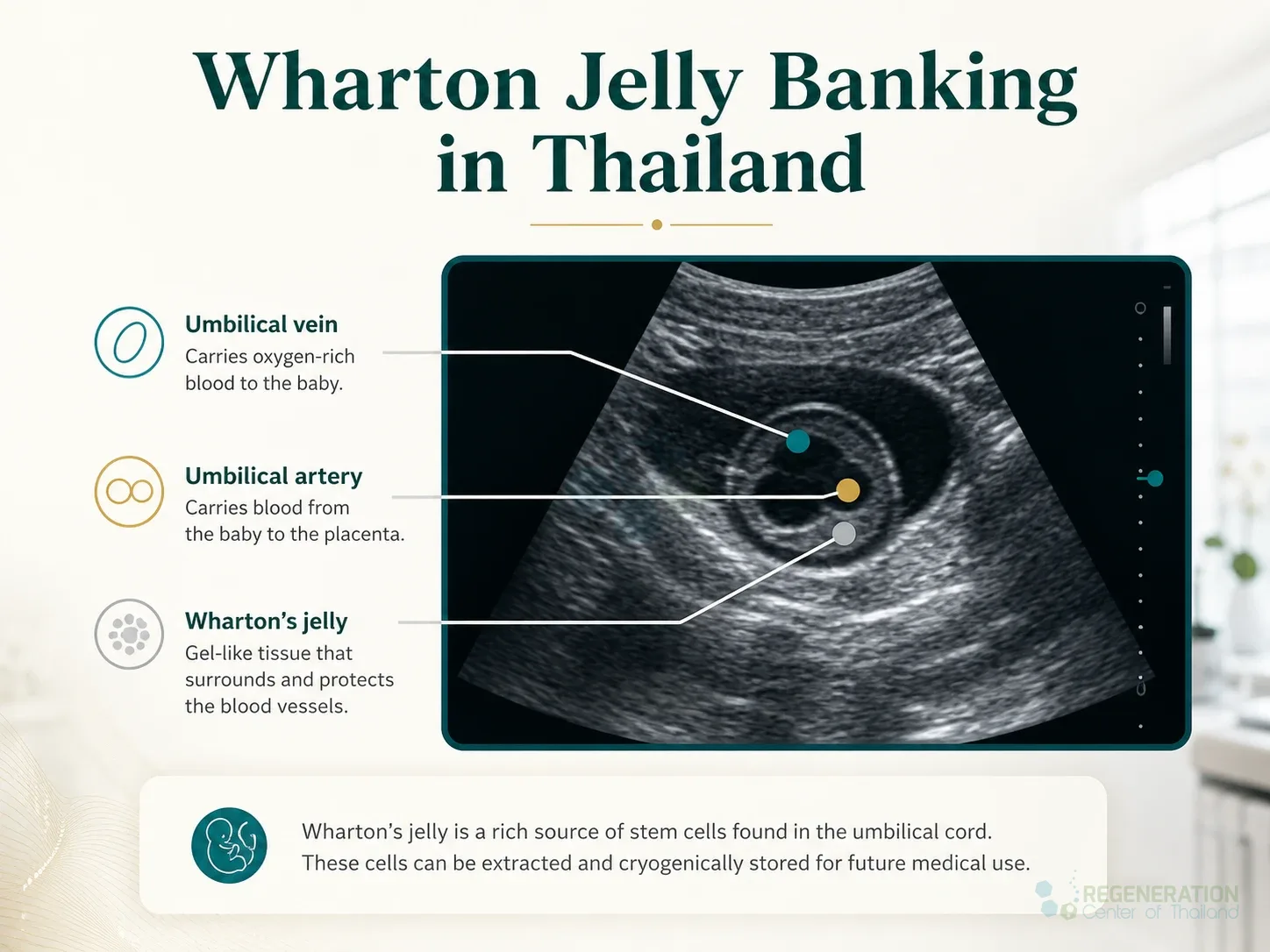
Wharton Jelly Cell Storage
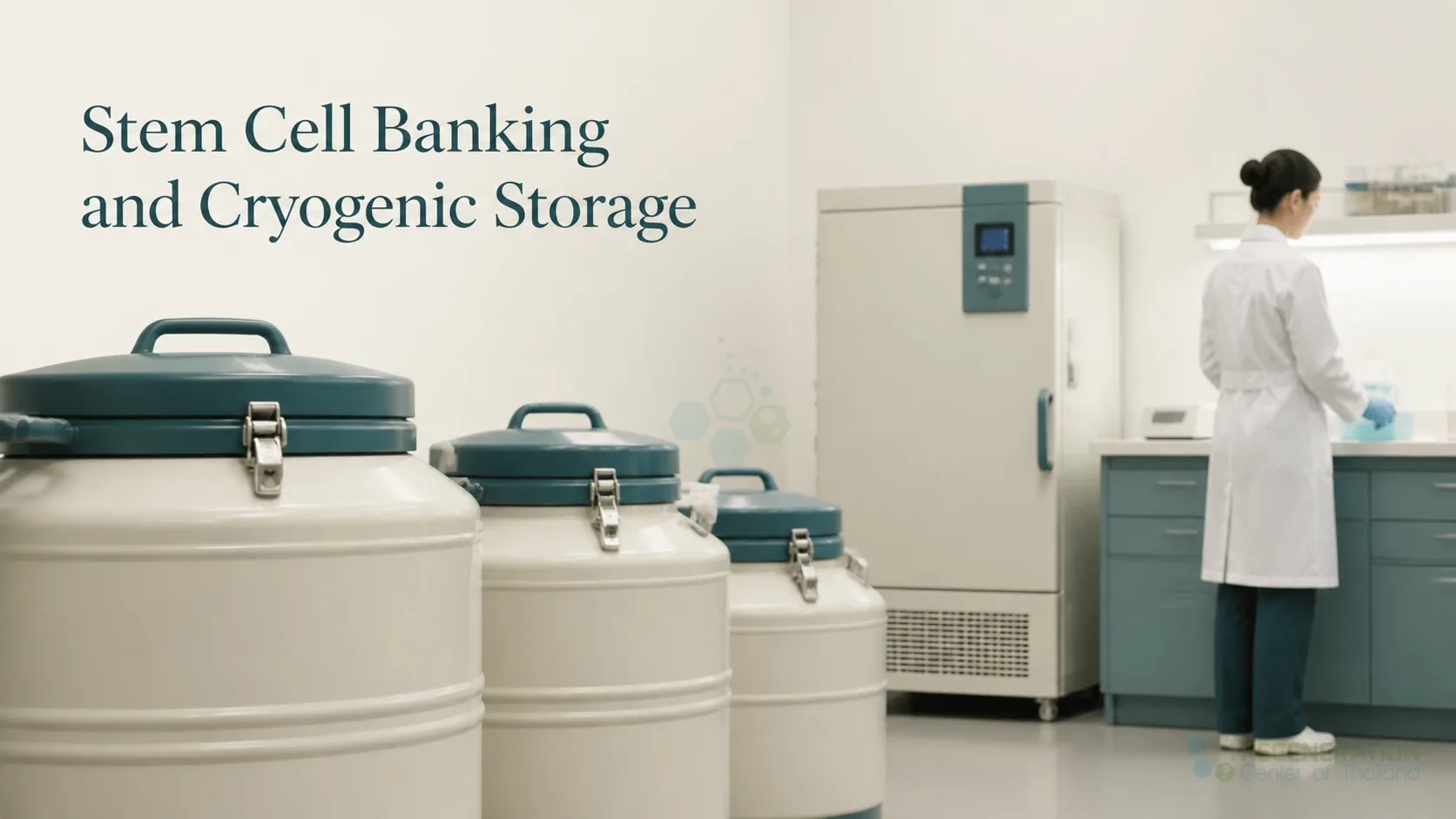
Wharton Jelly stem cell banks offer the extraction and cryogenic cell storage services where they extract/collect a new born child’s stem cells or cord tissue and store it indefinitely until future use is needed. If needed in medical use the stem cell banks can activate and prepare the cells for use in 24-48 hours from first request. This can be critical in time sensitive injuries such as heart attacks,strokes,brain and spinal injuries. The planned storage is also advantageous as our labs are able to study the quality and quantity of stem cells present the jelly or cord tissue so that the parents will know exactly how they can be utilized for stem cell therapies in the future, should the unfortunate need arise.
If you are interested in Wharton jelly banking or stem cell banking using cord blood,dental pulp or placenta derived stem cells please contact us today. Protecting your family’s future through Wharton jelly banking can be a good option for those who feel it’s better to be prepared for the future of regenerative medical care with cell banking in Bangkok.