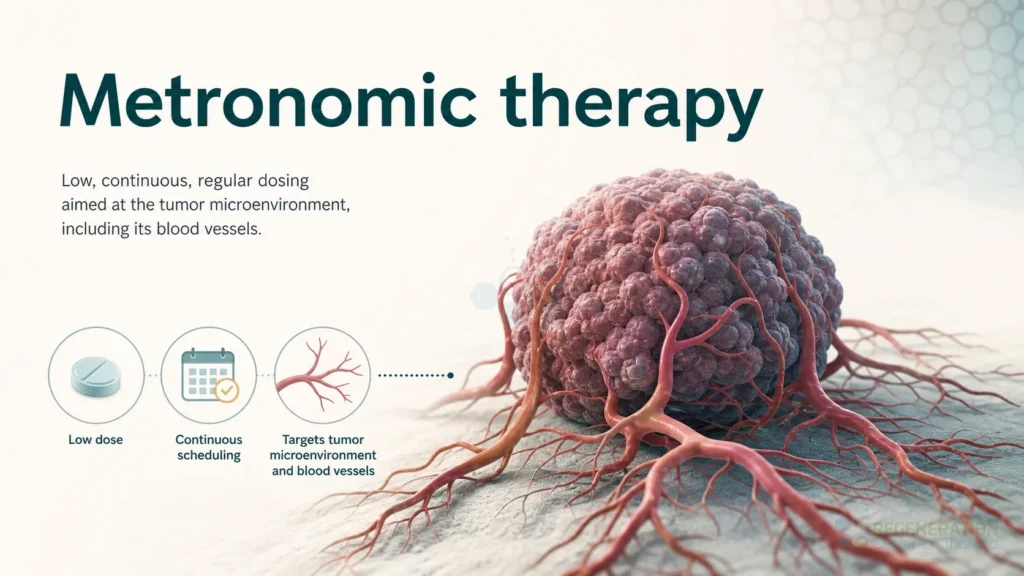
Metronomic therapy
Metronomic therapy, or metronomic chemotherapy, is a way of giving standard chemotherapy drugs at low doses, frequently and continuously, without the long drug-free breaks…
Read article↗
Editorial archive
Evidence-informed reading published for the Regeneration Center clinical journal.
Search the library85 published resources
Clear explanations. Useful clinical context. No promises without evidence.
Metronomic therapy, or metronomic chemotherapy, is a way of giving standard chemotherapy drugs at low doses, frequently and continuously, without the long drug-free breaks…
Read article↗"Lung capacity" usually means the amount of air the lungs can hold. Healthy adult lungs hold about 6 liters at most, and they reach…
Read article↗Trichloroethylene (TCE) is an industrial solvent that has been linked in several kinds of study to a higher risk of Parkinson's disease, the most…
Read article↗A short-lived response can be part of healing after an injury. The sections below explain how that response differs from chronic inflammation and where…
Read article↗Osteoarthritis (OA) is the most common form of arthritis in adults. It usually starts after the age of 40 and becomes much more common…
Read article↗An autoimmune disease is a condition in which the immune system attacks the body's own healthy tissue. Together these diseases are common: in a…
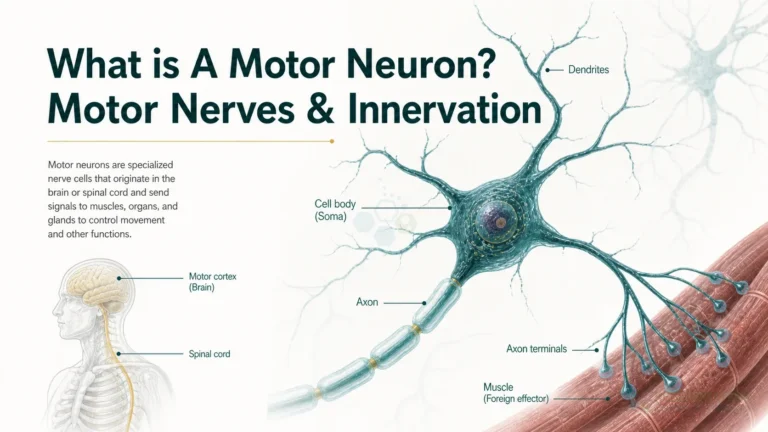
Read article↗Motor neurons, also called motoneurons, are the nerve cells that command muscles. Upper motor neurons have their cell bodies in the primary motor cortex…
Read article↗Adult stem cells live in most tissues and organs, in small numbers. They do not make any kind of tissue: each produces the specialised…
Read article↗Extracellular vesicles are particles released from cells that are enclosed by a lipid membrane and cannot replicate on their own.[1] Exosomes are one kind:…
Read article↗Make this page easier to read and navigate. Your choices stay on this device.
No adjustments activeReady to read this page.
Speech uses a voice already installed on your device. SCT does not receive or store what is spoken. Keep browser-service voices off when you require on-device processing.
How we support access and how to contact us.
We want every visitor to stemcellthailand.org to be able to find, read and act on the information here. That includes people who browse with assistive technology and people who need to change how a page looks before they can read it comfortably.
We treat accessibility as continuing maintenance rather than a one time project. We use the Web Content Accessibility Guidelines (WCAG) as our working reference and review accessibility during design, development and content review.
We do not claim that every page meets every guideline at all times. Parts of this site carry older medical content, embedded video or third-party services whose behavior sits outside our direct control. Where we find a barrier, we fix it and record the fix.
The panel on this site runs entirely in your browser. It can:
Reading aloud is a convenience for visitors who do not use assistive technology. It is not a screen reader. If you use VoiceOver, TalkBack, Narrator, NVDA or JAWS, those remain the right way to browse this site, and our work goes into the underlying page structure so they perform well. A settings panel cannot substitute for accessible markup, and we do not present it as one.
The panel creates no account, sets no tracking cookie and sends no reading preference to us. Your choices are stored in your own browser and stay on your device. Spoken reading uses the speech voices your browser or operating system already provides, so we never receive or store what is read aloud.
If you meet an accessibility barrier, or you need information from this site in another format, email info@stemcellthailand.org. Tell us the page you were on and what you were trying to do. We aim to reply within three to five business days, and we can provide the information through another channel where that helps.
Please do not include private medical details in an accessibility request.