


Please complete the inquiry form below. One of our staff will contact you within 1 business day
Mesothelioma is a rare, aggressive cancer that develops from mesothelial cells—the thin lining that covers and protects internal organs. It most commonly involves the pleura (the lining around the lungs), but it can also occur in the peritoneum (abdominal lining), and more rarely in the lining around the heart or testes. The strongest established risk factor is asbestos exposure, often from older construction materials and industrial products where asbestos fibers can be inhaled or swallowed. These microscopic fibers can persist in the body for decades, driving chronic irritation and inflammation that may eventually lead to malignant change. Symptoms are often subtle at first and can resemble more common respiratory or gastrointestinal conditions, which is why many patients present later in the disease course. Typical symptoms include progressive shortness of breath, chest tightness or pain, fatigue, unexplained weight loss, and pleural effusions (fluid buildup around the lungs), which can worsen breathing and discomfort. Diagnosing mesothelioma can be challenging because early findings may be non-specific, and imaging alone may not clearly distinguish mesothelioma from other pleural diseases; definitive diagnosis often requires a careful combination of imaging, fluid analysis, and tissue sampling with specialized pathology testing. [1].
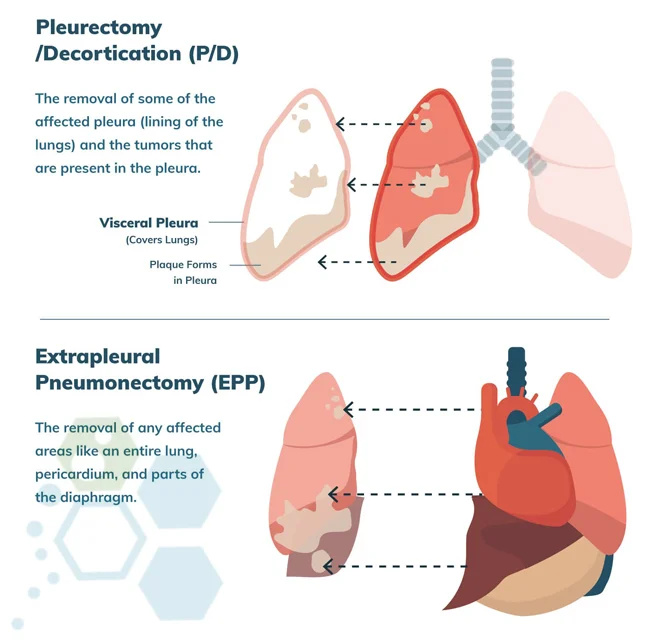
Recent research has shown that stem cell therapies can help address key aspects of mesothelioma, particularly inflammation, pleural fluid accumulation, symptom burden, and treatment personalization. In this context, “stem cell therapies” is often used as an umbrella term that can include mesenchymal stromal cells (MSCs) and other cell preparations being studied for their ability to influence the tumor microenvironment and inflammatory signaling. Separately, activated immune cells and tumor-informed cellular profiling have been investigated to help identify biomarkers (measurable signals linked to disease behavior), monitor response, and stratify patients into subgroups that may benefit from different treatment strategies. This biomarker-driven approach supports more personalized care, matching patients to therapies based on tumor biology, immune features, and clinical status, while also helping clinicians track disease activity over time. Importantly, in most real-world settings, these cell-based strategies are best viewed as adjunctive, symptom- and biology-guided tools that may complement standard oncology care, rather than a stand-alone replacement for established treatments.
Several risk factors can increase the likelihood of developing pleural mesothelioma. It should be noted that having one or several of these risk factors doesn’t automatically result in someone getting cancer. Asbestos exposure is the leading risk factor for mesothelioma and accounts for over 75 percent of all cases.
Other risk factors include:
Asbestos is a well-established cause of numerous health problems. Asbestos-related diseases and cancers include:
Occupational asbestos exposure is the leading cause of mesothelioma. Patients in construction, factories, mechanics, mining, shipbuilding, defense, military, or other manufacturing industries are at the highest risk. Asbestos exposure can also occur when materials containing asbestos are disturbed during construction or remodeling. Environmental asbestos exposure occurs when naturally occurring asbestos in soil or rocks is released into the air [2].
The development of mesothelioma can take between 10 and 50 years to develop. The peritoneum, pleura, and mesothelium (pericardial lining) form a thin protective covering for organs. The Mesothelium layer is made from mesothelial cells & tissue that react negatively when exposed to asbestos. The Asbestos fibers cause mesothelial tissue to inflame, resulting in the formation of scar tissue plaques on the surface of the lining. Malignant mesothelioma tumors begin to grow inside this scar tissue.
As mentioned previously, symptoms of Mesothelioma vary from patient to patient and usually develop gradually over very long periods. Some symptoms of Pleural Mesothelioma (lungs) include:
If you have one or more of these symptoms, please visit your primary care doctor and tell them about any asbestos exposure you might have had.
If your doctors suspect mesothelioma cancer, they will likely refer you to an oncologist for some diagnostic tests. There are several types of tests for mesothelioma that will be needed, including:
These tests are generally the first line of diagnosis for mesothelioma and are used to assess stage, severity, or metastasis. The key to successful treatment and cancer recovery is an accurate early diagnosis with early intervention. Traditional radiology tests sometimes cannot detect mesothelioma tumors until they have already metastasized, making it difficult for most patients to diagnose them at their early stages. New testing technologies, including genetic screening, have helped change this by uniquely identifying biomarkers associated with mesothelioma at much earlier stages.
Samples from patients with mesothelioma can be analyzed to detect genetic mutations associated with the disease that would not be detected through traditional diagnostic methods. This allows oncologists to accurately understand how far cancer has spread before treatment begins and make treatment decisions based on the current stage. Additionally, clinical trials for mesothelioma are exploring new ways to use stem cells to generate “organoids” (miniature organs) from patient cells to test how specific treatment combinations affect individual patients’ outcomes before they receive treatment.
Over the last two decades, stem cell therapy and functional healthcare techniques have been used to treat various types of cancers, including those affecting the lungs and abdomen (mesotheliomas). Mesenchymal stem cell therapy involves isolating, expanding, and transplanting healthy stem cells into patients to replace damaged or diseased tissue. Such treatments aim to restore normal immune function or slow down tumor growth. It is essential to understand that hematopoietic and mesenchymal stem cells provide different benefits and must be tailored to each patient’s current medical needs.
Hematopoietic (bone marrow) cells and mesenchymal stem cells (MSCs) are two types of (adult) stem cells that can work synergistically when combined with chemotherapy agents or immunotherapy medications, such as PD-1 inhibitors. Combining various cell types can improve outcomes by slowing tumor growth more effectively than either alone. It also helps reduce side effects associated with chemotherapy or immunotherapy drugs alone. Additionally, using adult stem cells (instead of embryonic cells) does not carry any ethical concerns surrounding research involving human embryos since they are much easier to collect without causing harm or trauma.
As advances in cancer stem cell research continue, this technology will become increasingly important for diagnosing and treating various cancers, including those affecting the lungs and abdomen (mesotheliomas) [5]. By combining different treatments, researchers hope to develop more effective ways to fight cancer while minimizing side effects that can be caused by chemotherapy or immunotherapy drugs used alone. The Regeneration Center uses enhanced mesenchymal stem cells to treat autoimmune diseases. Several recent trials have shown that mesenchymal stem cell therapy can be used in treating thymoma cancer (thyroid gland) and lung cancer.
NK T cells can be harvested from various tissues in the patient’s body, including bone marrow, and offer a unique ability to home and migrate to desired locations when modified and activated. The Regen Center sometimes uses a combination of NK cells and activated chimeric antigen receptors (CARs) to further target circulating cancer cells. NK cell therapy is somewhat similar to CAR T-cell therapy, as both can enhance a patient’s immune system to fight cancer better using isolated cells from the patient. In practice, NK-based approaches are being studied because they can recognize stressed or abnormal cells without requiring the same type of antigen “priming” that classic T-cell responses often depend on. This makes them particularly interesting in cancers where tumor cells may evade immune detection by altering antigen presentation. When NK cells are expanded and activated outside the body and then reintroduced, the aim is to increase the number and functional “readiness” of tumor-targeting cells during a window when residual microscopic disease may still be present. We may also pair NK-focused strategies with other immunotherapy approaches, such as checkpoint inhibition, cytokine support, or targeted antibodies, to potentially improve immune persistence and tumor recognition, depending on a patient’s disease profile and tolerance.
It’s also important to distinguish the concepts clearly: CAR T-cell therapy is a well-established category in certain blood cancers, while CAR-engineered NK approaches are a recent therapy option with different potential advantages (including lower risk of some severe immune toxicities in certain settings) and different limitations (such as persistence and trafficking challenges depending on the tumor environment). For solid tumors like malignant mesothelioma, most immune-cell therapies are still being refined to overcome barriers such as poor immune penetration into tumor tissue, suppressive signaling within the tumor microenvironment, and antigen variability from one patient to another. This is why treatment strategies are increasingly discussed in terms of combination immunotherapy and personalized targeting, rather than a single stand-alone modality.
A tightly integrated approach in the treatment of mesothelioma, our non-toxic anti-cancer protocols continue to improve remission rates year after year. With discoveries from cancer research & clinical trials, new protocols are being developed to treat stage 1-stage 4 mesothelioma. The Regeneration Center is a pioneer in regenerative healthcare and can apply the latest bioengineering techniques to better manage malignant tumors, helping our patients live cancer-free lives with minimal toxicity and without fear of recurrence.
To determine eligibility and treatment recommendations from our medical team, we will need to better understand the patient’s needs based on recent histological results, biopsy scans, blood tests, x-rays, and medical documents from your primary care oncologist.
Being diagnosed with the big “C” does not have to be the last stand. Even if traditional mesothelioma treatments have reached their limits, our team can offer options that bring you one step closer to the latest alternative mesothelioma treatment and living a cancer-free life. Using safe, evidence-based treatment options, our mesothelioma treatment protocol can help you and your family overcome the disease. To learn more, please contact us today.
[1] ^Klampatsa A, Haas AR, Moon EK, Albelda SM. Chimeric Antigen Receptor (CAR) T Cell Therapy for Malignant Pleural Mesothelioma (MPM). Cancers (Basel). 2017 Sep 1;9(9):115. doi: 10.3390/cancers9090115. PMID: 28862644; PMCID: PMC5615330.
[2] ^Makarawate P, Chaosuwannakit N, Chindaprasirt J, Ungarreevittaya P, Chaiwiriyakul S, Wirasorn K, Kuptarnond C, Sawanyawisuth K. Malignant mesothelioma of the pericardium: a report of two different presentations. Case Rep Oncol Med. 2013;2013:356901. doi: 10.1155/2013/356901. Epub 2013 Aug 21. PMID: 24027648; PMCID: PMC3763578.
[3] ^Patarapadungkit N, Jangsiriwitayakorn P, Chaiwiriyakul S, Sirivech P, Thongbor R, Phanomsri EO, Nititarakul L. Modified Liquid-Based Cytology Technique for Immunocytochemistry in Effusion Specimen. Asian Pac J Cancer Prev. 2019 Sep 1;20(9):2611-2617. doi: 10.31557/APJCP.2019.20.9.2611. PMID: 31554354; PMCID: PMC6976855.
[4] ^Kindler HL, Ismaila N, Armato SG 3rd, Bueno R, Hesdorffer M, Jahan T, Jones CM, Miettinen M, Pass H, Rimner A, Rusch V, Sterman D, Thomas A, Hassan R. Treatment of Malignant Pleural Mesothelioma: American Society of Clinical Oncology Clinical Practice Guideline. J Clin Oncol. 2018 May 1;36(13):1343-1373. doi: 10.1200/JCO.2017.76.6394. Epub 2018 Jan 18. PMID: 29346042; PMCID: PMC8058628.
[5] ^Mutti L, Peikert T, Robinson BWS, Scherpereel A, Tsao AS, de Perrot M, Woodard GA, Jablons DM, Wiens J, Hirsch FR, Yang H, Carbone M, Thomas A, Hassan R. Scientific Advances and New Frontiers in Mesothelioma Therapeutics. J Thorac Oncol. 2018 Sep;13(9):1269-1283. doi: 10.1016/j.jtho.2018.06.011. PMID: 29966799; PMCID: PMC6643278.
